Cardiac apprehension does not give you a rehearsal. When it happens, the individual who begins breast compressions and makes use of an AED becomes the bridge in between life and death. That truth is why certification matters. A CPR course with the best certification does greater than hand you a card. It provides you an examined educational program, qualified evaluation, and the self-confidence that your skills line up with current evidence and local demands. I have trained health and wellness professionals, institution staff, and parents for more than a decade. The distinction between a recognized cpr course and a generic workshop appears when stress is high, the flooring is crowded, and a person's enjoyed one is turning blue.
Accreditation, qualification, and acknowledgment: the language that journeys individuals up
People commonly blend 3 terms with each other as if they mean the exact same point. They do not. Certification is the procedure whereby an independent body evaluates a training supplier or a details program against an accepted criterion. Certification is the personal document you receive that says you satisfied the standard for a defined duration. Recognition is just how employers, regulatory authorities, and insurance providers treat that qualification. You desire all three to align. A legitimate first aid and cpr course is accredited to a published standard, problems a certification that plainly states the degree you achieved, and is acknowledged by your employer or governing agency.
Across countries, the bodies doing accreditation differ. In the USA, the American Heart Organization (AHA) and the American Red Cross sit at the center for CPR and Basic Life Assistance (BLS) programs, while some states add their own demands for child care workers or lifeguards. In Australia, Registered Educating Organisations (RTOs) deliver systems of expertise such as HLTAID009 Offer cardiopulmonary resuscitation and HLTAID011 Give first aid under the nationwide framework. In the UK, the Resuscitation Council UK sets scientific standards, while Ofqual-regulated granting organisations certify several first aid courses. Comparable patterns exist throughout Canada, New Zealand, and parts of Europe, each with its own mix of national regulators and personal or charitable organizations. If a service provider can not explain which requirement they align to and who audits them, maintain looking.
Why the badge on your certificate adjustments outcomes
Accreditation is not a label for marketing duplicate. It drives the material, the teacher's certifications, the moment spent on hands-on technique, and the way your competence is assessed.
In one work environment I visited, staff had gone to a quick, non-accredited session sold as a "CPR awareness course." When a contractor fell down months later on, the very first responder waited. She bore in mind an appealing acronym however had actually never ever pushed to the right depth on a manikin, and she was uncertain concerning the price. The emergency situation solutions dispatcher needed to trainer her via every step. She did her best. But the gaps were obvious.
Contrast that with a storage facility team that had completed an accredited first aid and cpr course through a reliable supplier. Two individuals acknowledged agonal breathing, began compressions within secs, sent out a jogger for the AED, and rotated every two mins to keep top quality. The AED supplied one shock on very first analysis, and by the time paramedics arrived, the person had a perfusing rhythm. Skill wedding rehearsal, sensible scenarios, and instructor responses altered the arc of that day.
Quality control is the peaceful power of accreditation. It systematizes the minimum hours on task, links the program to current resuscitation standards, and demands quantifiable efficiency criteria. It additionally requires documented risk administration for practical sessions, upkeep of tools like AED instructors and grown-up, child, and infant manikins, and moderated evaluations that maintain pass marks honest.
The core components an accredited CPR course need to include
A reputable cpr training program does not sink you in theory, after that rush the practice. It stabilizes succinct scientific research with comprehensive repeating. No matter the brand on the wall surface, try to find these components woven right into the training course:
- Clear alignment to current resuscitation standards, with the publication year specified on products. If a service provider does not mention the standard variation, it is difficult to know what you are learning. A defined range, for instance grown-up CPR just, or grown-up, youngster, and infant CPR and choking administration. Your first aid certificate must mean this out. Hands-on time with unbiased responses. Compression deepness and rate are not uncertainty. Manikins with feedback tools or teacher surveillance bring your technique right into the risk-free zone. AED usage that surpasses "transform it on." You need to exercise pad positioning on different body types, safe clearing, and fixing usual problems like hair, sweat, or implanted devices. Assessment against published requirements. You should know what you have to show to pass. If no evaluation is required, you are not earning a certificate that indicates much.
A great supplier likewise establishes sensible expectations around the cpr correspondence course period. A lot of identified programs stand for one year for CPR skills since psychomotor abilities degeneration rapidly. First aid systems that include hemorrhaging control, burns, and crack management might hold for as much as three years in some areas, however numerous workplaces still call for yearly refreshers for CPR. Ask your employer or licensing body what tempo they anticipate, then match your booking to that cycle.
How accreditation varies by function: public, work environment, and medical settings
The right program is not the same for every learner. A parent that wants skills for the home needs various deepness than a paramedic trainee. The trick is to choose the degree that matches your risk profile and governing environment, without spending for modules you do not need.
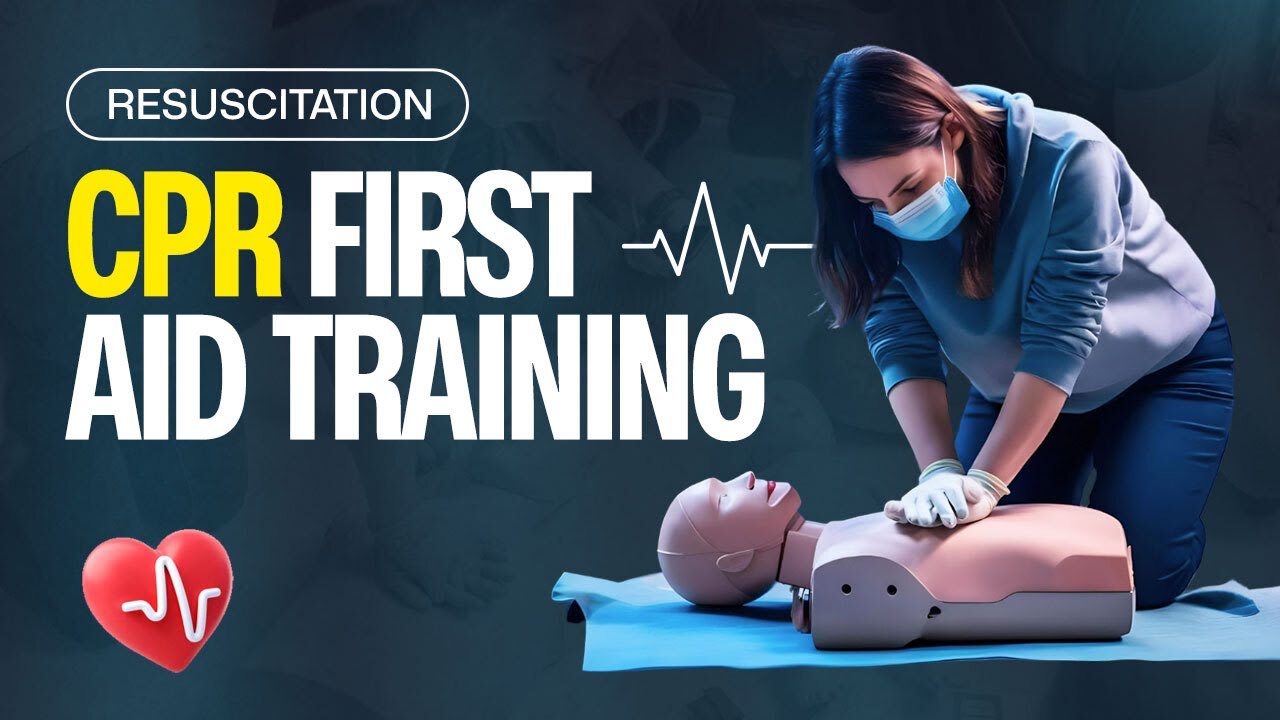
For the public, neighborhood CPR or first aid and cpr courses generally cover grown-up compressions and AED usage, with an alternative to add kid and baby modules. Period runs two to 4 hours. The most effective of these classes still maintain certification to nationwide guidelines, maintain trainer proportions affordable, and offer a simple first aid certificate that an employer would certainly recognize.
Workplaces require to map course choice to hazards and responsibilities. A low-risk workplace might only require a couple of staff with recognized first aid training and a cpr course updated annually. A childcare facility, swimming pool, or manufacturing flooring encounters higher danger. Childcare regulators commonly need pediatric CPR including infant choking management and anaphylaxis reaction. Marine centers desire oxygen distribution https://angeloytpz525.tearosediner.net/cpr-for-beginners-getting-rid-of-fear-and-taking-action and spinal preventative measures. Building may add trauma components for significant blood loss and crush injury. Numerous companies companion with a provider like First Aid Pro or comparable companies that can customize web content while keeping certification undamaged. That equilibrium matters. If a customized circumstance deviates from the accrediting body's range, the certification might not meet audit requirements.
Clinical setups such as medical facilities and dental facilities generally mandate BLS or ALS/ACLS from specific approving companies, renewed on an established schedule. The analysis is stricter. Expect two-person CPR technique, bag-mask ventilation, group interaction, and scenario-based testing. If you are a clinician, inspect your board or healthcare facility credentialing workplace prior to you book. They typically list the precise cpr courses they accept.
How to vet a company past the logo design on the brochure
Logos can be certified. Credibility can not. When I evaluate a supplier for a service or institution, I look far past the heading brand name. I examine instructor credentials, equipment upkeep logs, analysis rubrics, and student-to-instructor ratios. I check out recent participant feedback, not the greatest hits from 5 years back. I call and ask hard questions concerning their scenario realism, AED practice, and exactly how they sustain students that struggle. The solutions disclose culture.
A few specifics to validate in simple language:
- Who recognizes your cpr training, and what guideline year do you follow? Search for a clear, recent reference to the local resuscitation council or equivalent. What is the instructor-to-student ratio during hands-on technique? Proportions greater than 1:12 typically thin down responses. I aim for 1:8 or better for novices, particularly when pediatric abilities are included. Do you utilize feedback-enabled manikins? Instruments that action depth and rate aid learners appropriate errors rapidly. If not, what is your method for unbiased feedback? How long is the certification valid, and does it satisfy my industry's acknowledgment requirements? Obtain this in writing, with course codes where applicable, such as HLTAID009 for Australian CPR units. What takes place if a trainee does not satisfy the requirement on the day? A severe carrier supplies removal or re-assessment options, not a silent pass.
That short list mirrors what auditors ask when they review training records after a case. It also reflects what students require genuine proficiency: time, responses, and clear expectations.
The makeup of a high quality certificate
A first aid certificate or CPR card that holds up in an audit shares typical features. The provider's legal name and accreditation information appear in ordinary view. The training course title and, where suitable, the national device code are meant properly. The range states adult, youngster, and baby protection when appropriate, not just a generic "CPR." The issue day and expiration or suggested revival period are both present. The student's full name matches federal government ID.
I have actually seen individuals turned away from work sites because their certificate lacked a code or expiration. It is an avoidable disappointment. If you obtain an electronic certification, ensure the PDF is proven by QR code or serial number. More employers now cross-check credibility due to the fact that fraudulent certifications distribute in some areas. Liable carriers have embraced verification portals, which secure both students and employers.
Blended, online, and in-person: what layouts work and what to watch
Blended discovering has actually developed. Pre-course on the internet modules can supply theory successfully and totally free class time for practice. When succeeded, this style enhances end results since students show up with a standard vocabulary and can spend even more time with manikins and AED trainers. When done inadequately, it becomes a box-ticking workout where people click through slides and guess test solutions prior to the genuine job begins.
Entirely online CPR courses are not suitable for first qualification due to the fact that CPR is a psychomotor ability. Reliable recognizing bodies insist on in-person assessment of compressions, ventilations where instructed, and AED use. If a website promises a complete first aid and cpr certification without any hands-on component, be unconvinced. Some areas permit online-only cpr correspondence course web content for theory updates, however they still require an in-person abilities inspect within a defined window. Verify what your territory and market accept.
For in-person delivery, classroom setting issues. A confined space with one grown-up manikin for twelve students types easy seeing, not learning. A well-run session rotates students through grownup, child, and infant stations, and incorporates practical challenges. For example, practicing AED pad placement around a transdermal patch or implanted pacemaker mark prepares you wherefore occurs in the field. Running a circumstance in a hallway shows you to handle onlookers and ecological threats. These details are not fluff. They form muscular tissue memory and judgment.
How standard updates surge into program quality
Resuscitation guidelines upgrade on a five-year cycle in many nations, with interim advisories as evidence advances. Modifications are frequently refined instead of significant. Emphasis could move to reduce disturbances in compressions, improve hand placement, or expand referrals on when to stop resuscitation. Certified suppliers update their curriculum, assessments, and trainer training when guidelines transform. That procedure takes work and investment.
I keep in mind the transition when responses devices became a lot more usual. In the beginning, some instructors stood up to, arguing that their experienced eye was enough. After that they saw the information. Lots of students that looked proficient were under pressing by a centimeter or fatiguing early. The tools did not change teachers. They furnished them. Certified programs adopted the innovation much faster since their audit structures awarded unbiased dimension. Non-accredited workshops lagged, and their learners paid the rate in lower-quality compressions when it counted.
When you renew your cpr certification, ask what has transformed considering that your last class. A thoughtful instructor will mention updates and, extra importantly, discuss the reasoning behind them. Understanding the why secure the memory far better than a rule without context.
The edge instances you wish you never ever satisfy, and just how accreditation prepares you
Real life is untidy. You may kneel beside a large person on a slim stairwell. You might find a toddler with a grape lodged deep and a panicking parent sobbing behind you. You may need to cut through wet garments to put AED pads while rainfall drums on a metal roof.

Accredited training does not promise to present every feasible circumstance, but it does demand training concepts you can adapt:
- Start compressions early, and reduce pauses. That single regulation has outsized influence throughout settings. Use an AED as soon as it arrives, and do not postpone shock distribution with added actions. Clear communication ends up being the security net. Adjust method for infants and kids, and coach troubled member of the family while you function. Competent teachers show the voice and body movement that de-escalate chaos. Recognize relatively easy to fix causes and hazards, from drowning and hypoxia to electrocution. Excellent programs weave these into circumstances rather than adding them on as trivia.
I have actually viewed students deal with a simulated choking baby with trembling hands in class, after that perform the same sequence with the tranquil emphasis of somebody that has been there when it took place for real. That change originates from exercise with comments, from instructors that have sufficient room and time to instructor instead of rush. Certification develops the problems for that coaching to occur.
When price and ease pull in the contrary direction
Price differs commonly. I see area CPR courses provided for less than the price of a takeout supper, and industry-specific first aid courses climbing up a number of hundred dollars when advanced components or on-site distribution are included. Time invested issues as well. A two-hour session is easier to set up than a full day. People weigh the compromises.
From a purchaser's seat, a reduced price is not automatically a warning. Large companies with scale can maintain fees down and still preserve high quality. Discount rates for groups or for partnering with a first aid pro level company can also bring expenses to a reasonable area. The indication is opacity. If you can not see what accreditation the training course carries, how long it runs, exactly how evaluation works, and what your first aid certificate includes, the price factor loses significance. Clear suppliers detail their incorporations and exclusions, and they describe travel and cancellation policies up front.
Convenience has its place. Blended formats decrease time far from the office. Night and weekend classes aid parents and shift employees. Mobile fitness instructors who concern a website can include your tools and floor plan right into circumstances, which repays when emergencies take place in those precise corridors. Simply make certain the accreditation follows you. On-site delivery should still fulfill the very same requirements, with the very same devices and assessment, to provide recognized cpr courses certificates.

Red flags that signify a hard pass
A couple of patterns consistently predict frustration. Look for service providers that guarantee ensured passes without discussing analysis requirements. Be wary if they dismiss hands-on method as optional, or if they advertise a first aid course valid for 5 years without refresher courses. If testimonials mention chock-full rooms, rushed guideline, or broken manikins, think them. If your questions concerning acknowledgment obtain vague answers, or if the provider bushes on whether your company will certainly accept the certificate, leave. It is less costly to rebook than to discover on audit day that your documentation is worthless.
How employers can make accreditation help them
If you handle a group, construct a straightforward matrix that connects work roles to needed training and renewal intervals. Usage program codes where your territory has them. Store copies of first aid and cpr course certificates in a centralized system with reminder sets off at 90, 60, and 30 days prior to expiry. When you alter suppliers, map similarities. As an example, if you move from one certifying body to another, validate that your regulator accepts both, and keep in mind any type of distinctions in extent. During induction, ask brand-new hires for their current certificates and confirm them through the company's site. It takes mins and stays clear of surprises.
Consider running short, scenario-based refresher courses between formal renewals. Ten mins at a staff meeting to exercise calling for aid, locating the AED, and cpr training beginning compressions in your real space transforms understanding into muscle memory. It also reveals gaps, like an AED locked in a workplace after hours. An accredited supplier can help you create these drills so they match instead of change formal cpr training.
The course for individuals: choosing well, learning deeply, maintaining skills alive
If you are picking a training course on your own, begin with your goal. Do you require a certificate approved by your company, or are you seeking skills for family security? In either case, choose an accredited program. Check out the program summary very closely. Make sure it covers the populaces you appreciate, whether adult only or adult, kid, and infant. If you have a newborn or assist look after a grandparent, request for method time with those details manikins. Schedule earlier than you assume. Emergencies do not delay till your timetable clears.
During the class, be a demanding student in the very best feeling. Ask for feedback till you can strike target deepness and rate for 2 mins directly without drifting. Practice switching with a partner at the correct time. Use the AED instructor more than once. If something really feels uncomfortable, claim so. Good teachers readjust your position, your hand placement, and your breathing technique up until it clicks. That is their craft.
After you make your first aid certificate, make a pointer to evaluate at the midway mark prior to expiry. Go through the steps out loud. Situate the AED at the workplace, at the gym, at your child's institution. If your supplier offers a quick cpr correspondence course or abilities inspect, take it. Abilities fade silently. Refreshers bring them back to the front of your brain, right where you need them.
The quiet worth of society and character
Accreditation measures structure. Personality comes from individuals that teach you. Over the years, one of the most reliable teachers I have worked with share a couple of traits. They are tranquil, specific communicators. They carry lived experience without theatrics. They fix with regard and push for mastery because they recognize exactly how it feels to kneel on a cold floor and wish your hands bring someone back. When you discover a supplier that grows that society, stick with them. Your certification will hold weight theoretically. Your abilities will hold weight in the moment.
Accreditation obtains you to the ideal area. Interest to extent, assessment, and revival cadence maintains you on the best street. The commitment to practice and comments puts you at the correct front door when it matters most. Whether you are scheduling first aid training for a firm, enlisting in cpr courses as a brand-new moms and dad, or lining up an office's annual cycle of first aid courses, buy the criterion that withstands scrutiny and stress. A person you might never fulfill is trusting that choice.